

We analyzed pre-foreclosure filings on corporate-owned single-family rentals across the country, examining over 12,000 active pre-foreclosures to identify the most affected markets.
This represents approximately 0.16% of the roughly 8 million corporate-owned single-family rentals nationwide. We define "corporate-owned" as properties held by a non-individual entity (corporation, LLC, etc.). Many of these owners are small landlords with just one or two properties in an LLC.
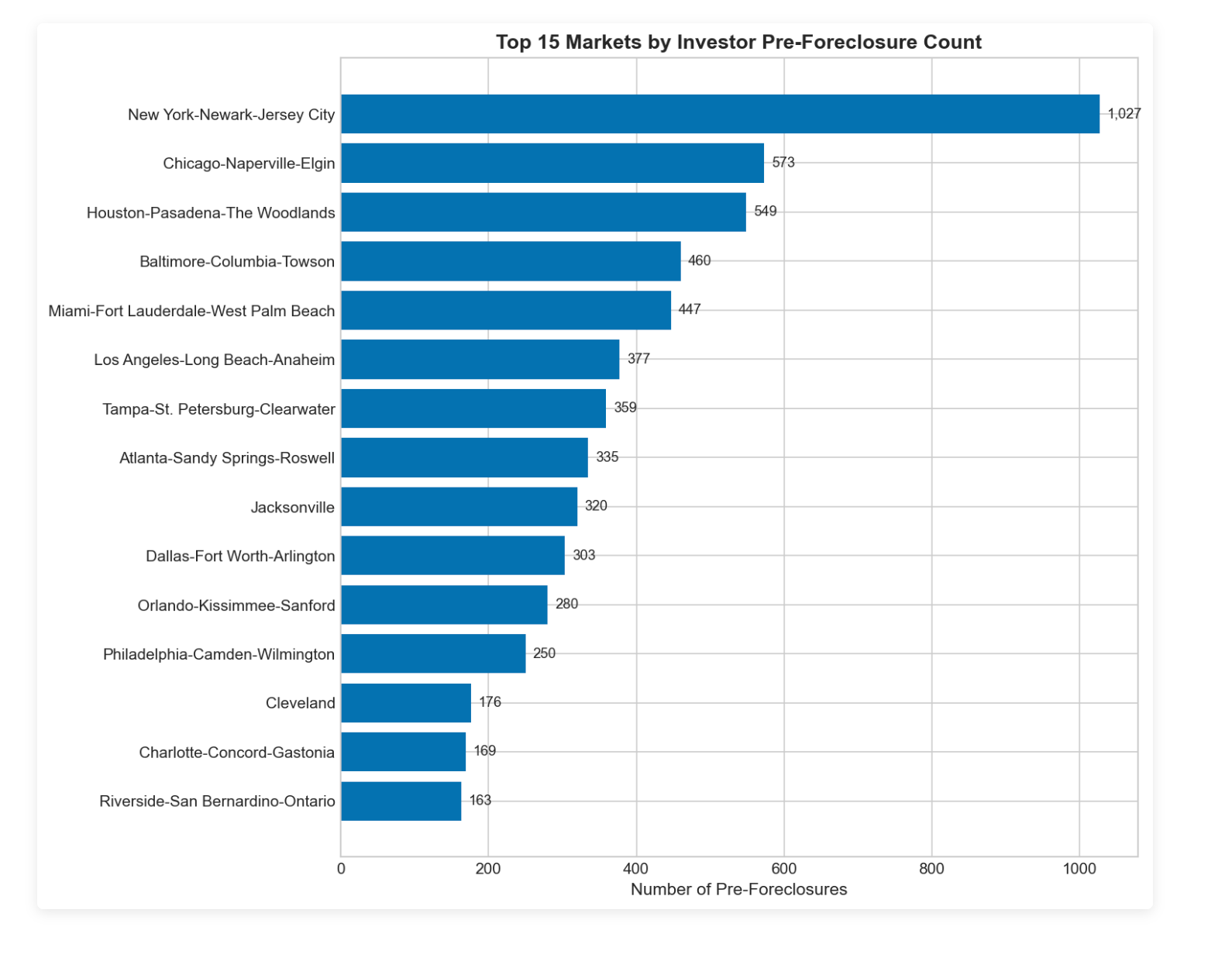
By total count, New York, Chicago, and Houston metros have the greatest number of corporate owned SFR pre-foreclosures.
By State
While it’s expected that the largest metros show the most distress, the concentration in certain Sun Belt and Rust Belt markets is notable:
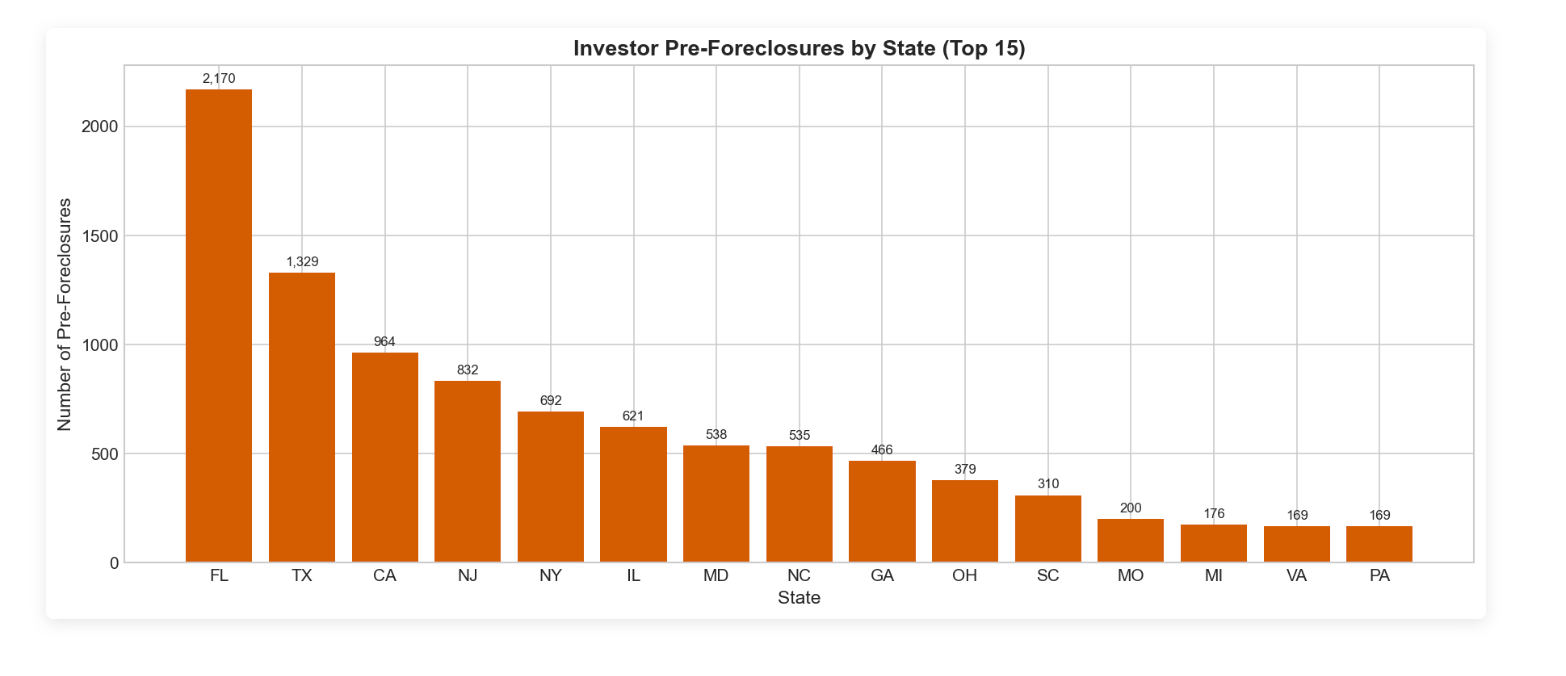
Florida dominates at the state level with 2,200 pre-foreclosures, almost double the next highest state, Texas (1,367).
Markets With Highest Pre Foreclosures Rates
When we look at pre-foreclosures as a percentage of total corporate SFR properties, we see smaller Florida markets rise to the top along with Trenton and Kiryas Joel.
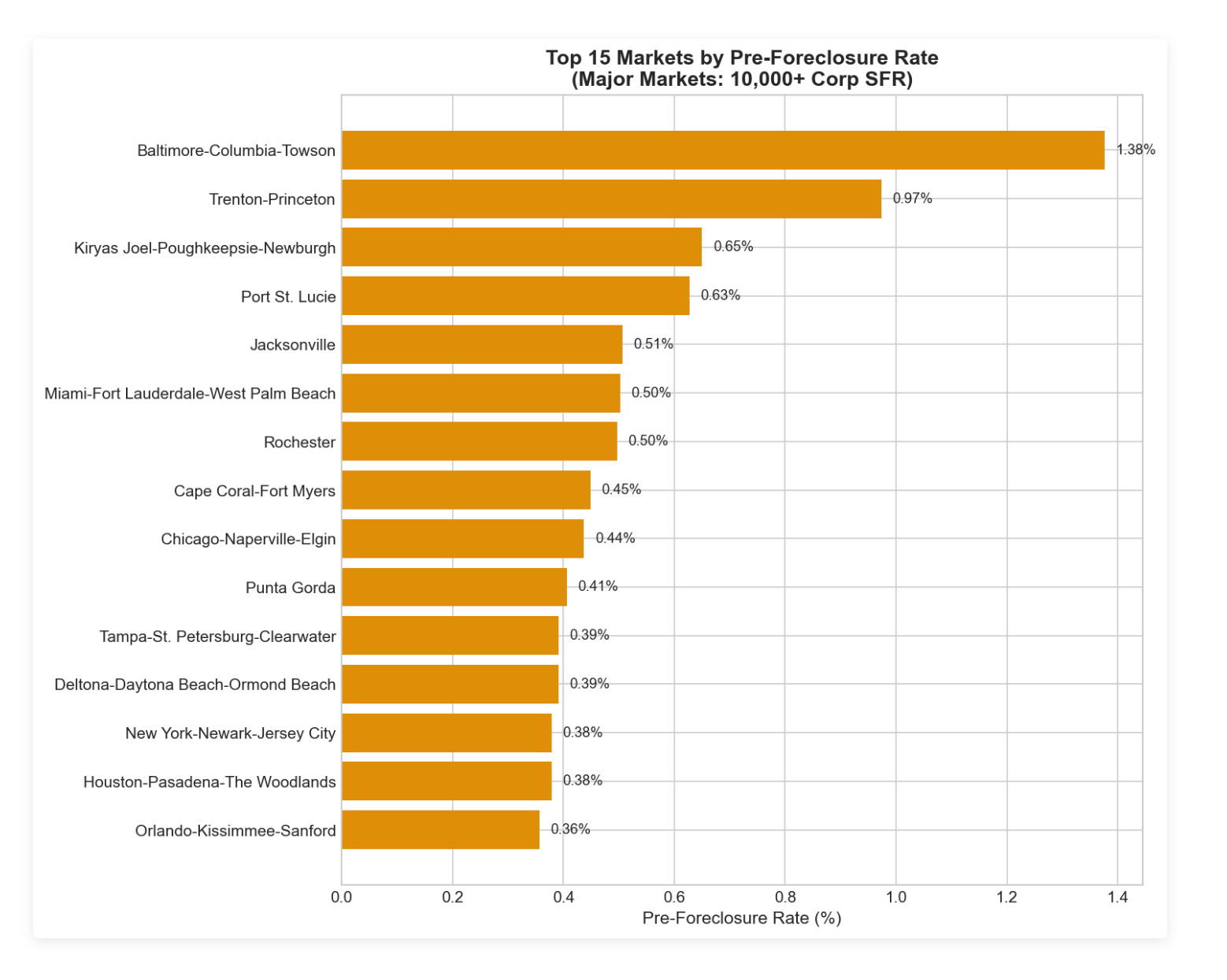
Many Florida rentals faced flat or declining rents, sharp insurance increases, and home price depreciation, making them particularly susceptible to elevated pre-foreclosure rates.
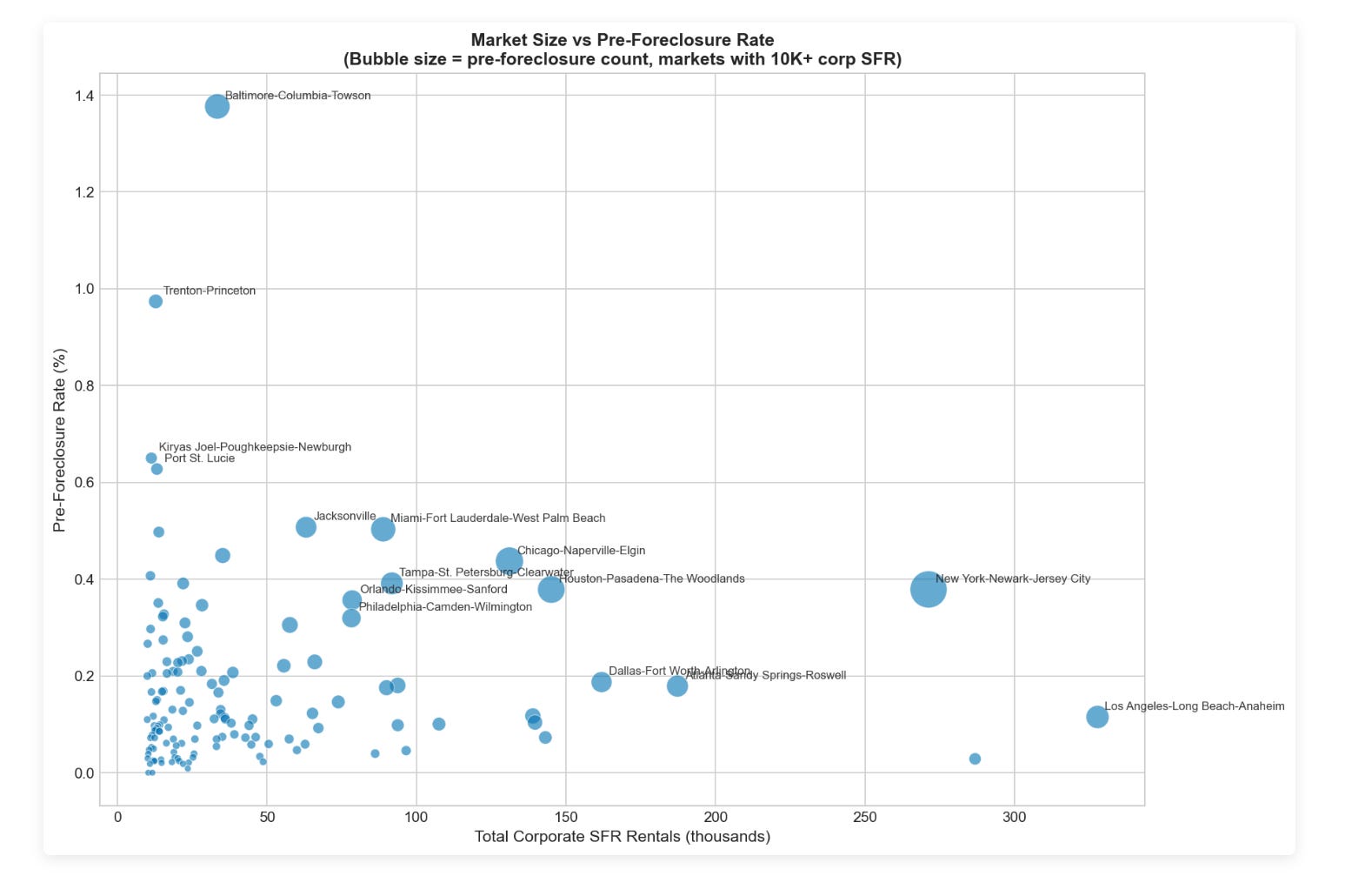
Baltimore's rate is significantly higher than other markets due to a fraud case in which hundreds of properties from a handful of borrowers are currently in pre-foreclosure.
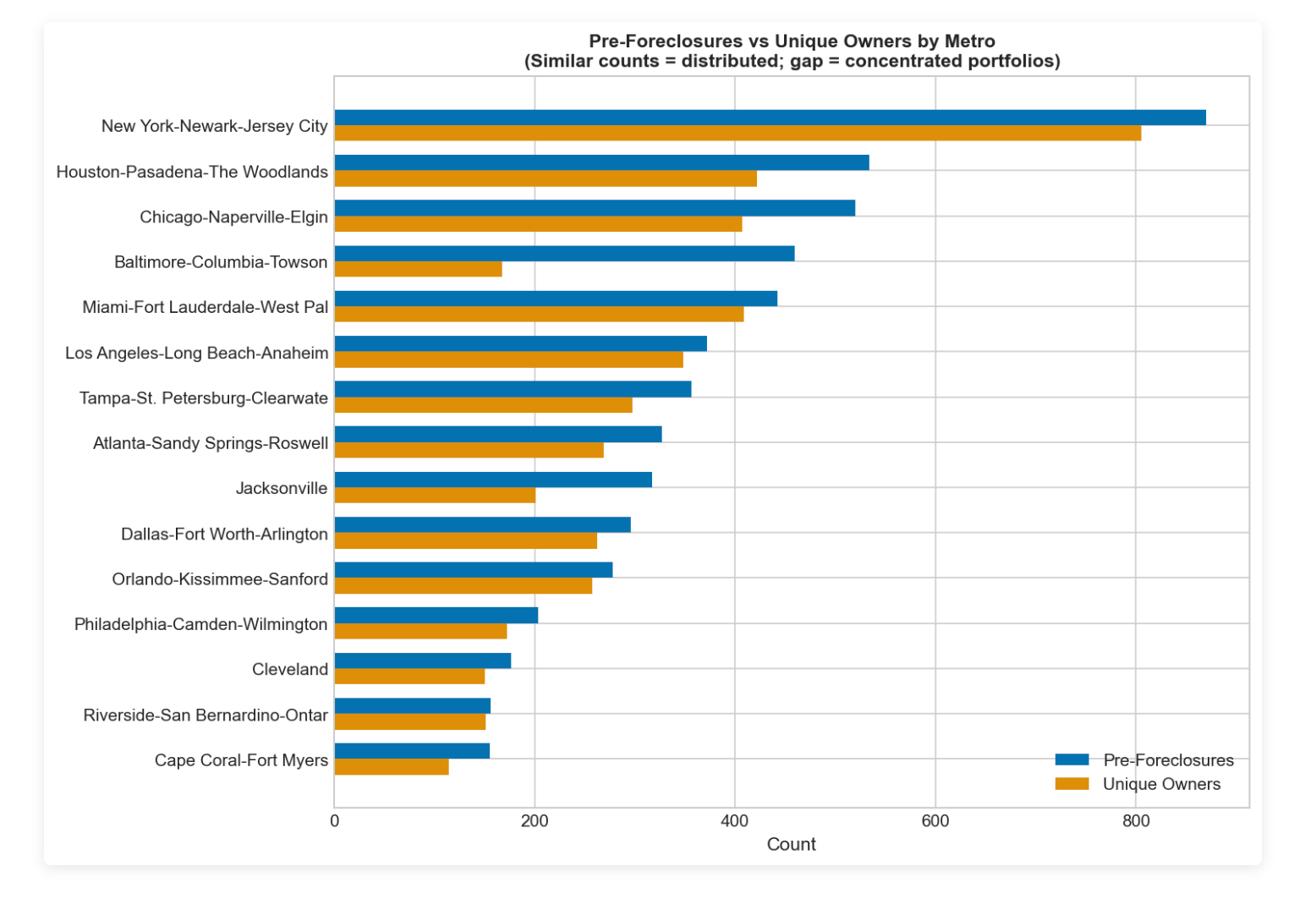
As shown below, Baltimore has by far the fewest unique owners relative to its pre-foreclosure count. The average pre-foreclosures per owner is 3× higher than in other major metros, driven largely by a single fraud case.
Overall Market
Overall, pre-foreclosure rates for corporate-owned single-family rentals remain very low, with nearly every major metro below 0.50%.
In the coming weeks, we'll take a deeper dive into not just pre-foreclosures but also completed foreclosures, along with other market health indicators: rising inventory, days on market, markets at risk of price depreciation, and areas where rent growth is stalling.