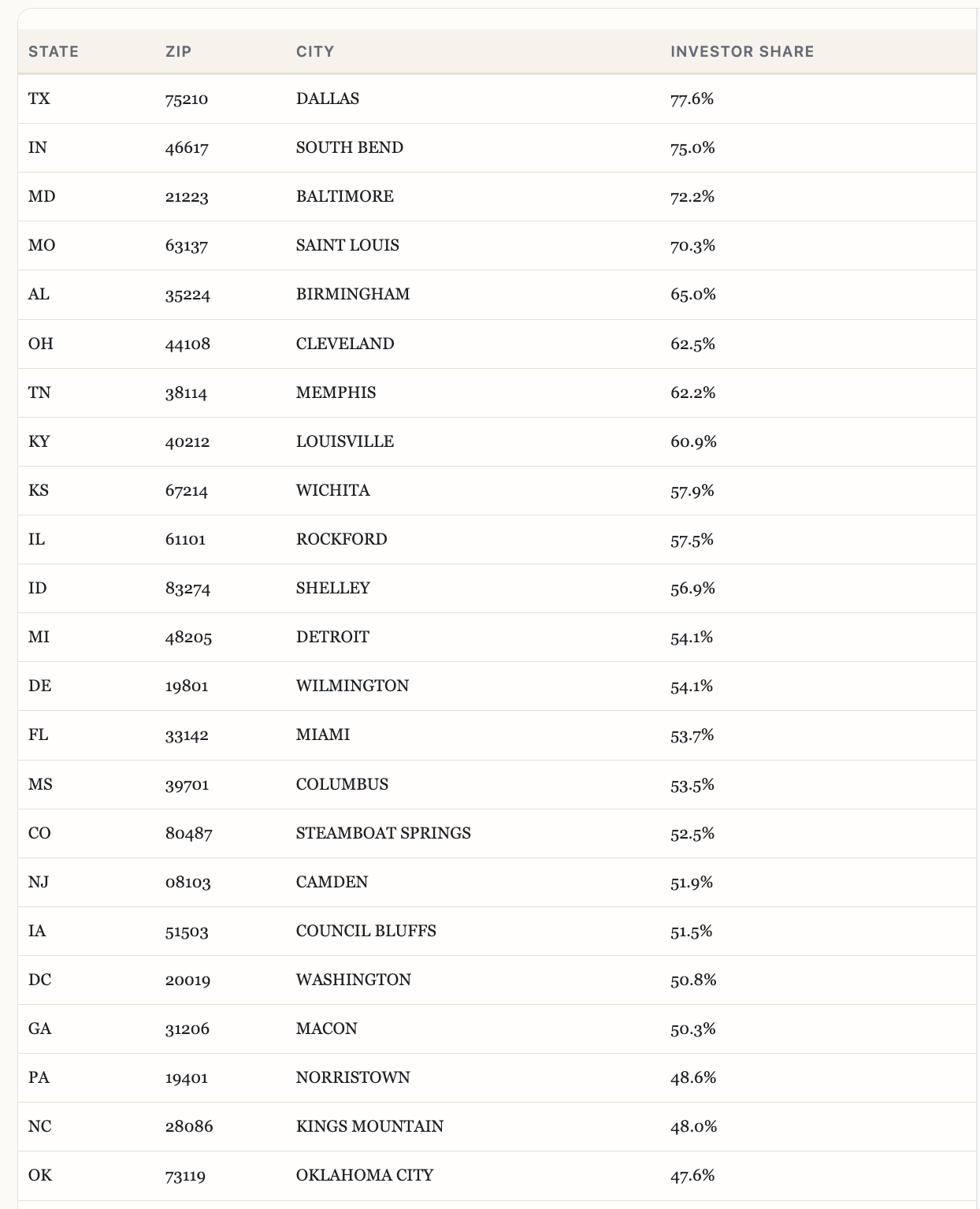
Executive Summary
75210 in Dallas, TX ranks first nationally at 77.6%, overtaking the usual St. Louis and Baltimore names on pure concentration.
The deepest top-100 metro clusters remain St. Louis, Memphis, Baltimore, and Cleveland, anchored by older housing stock and rehab-friendly price points.
46617 in South Bend, IN is the clearest new headline ZIP at 75.0% investor share.
Where Investors Are Most Active
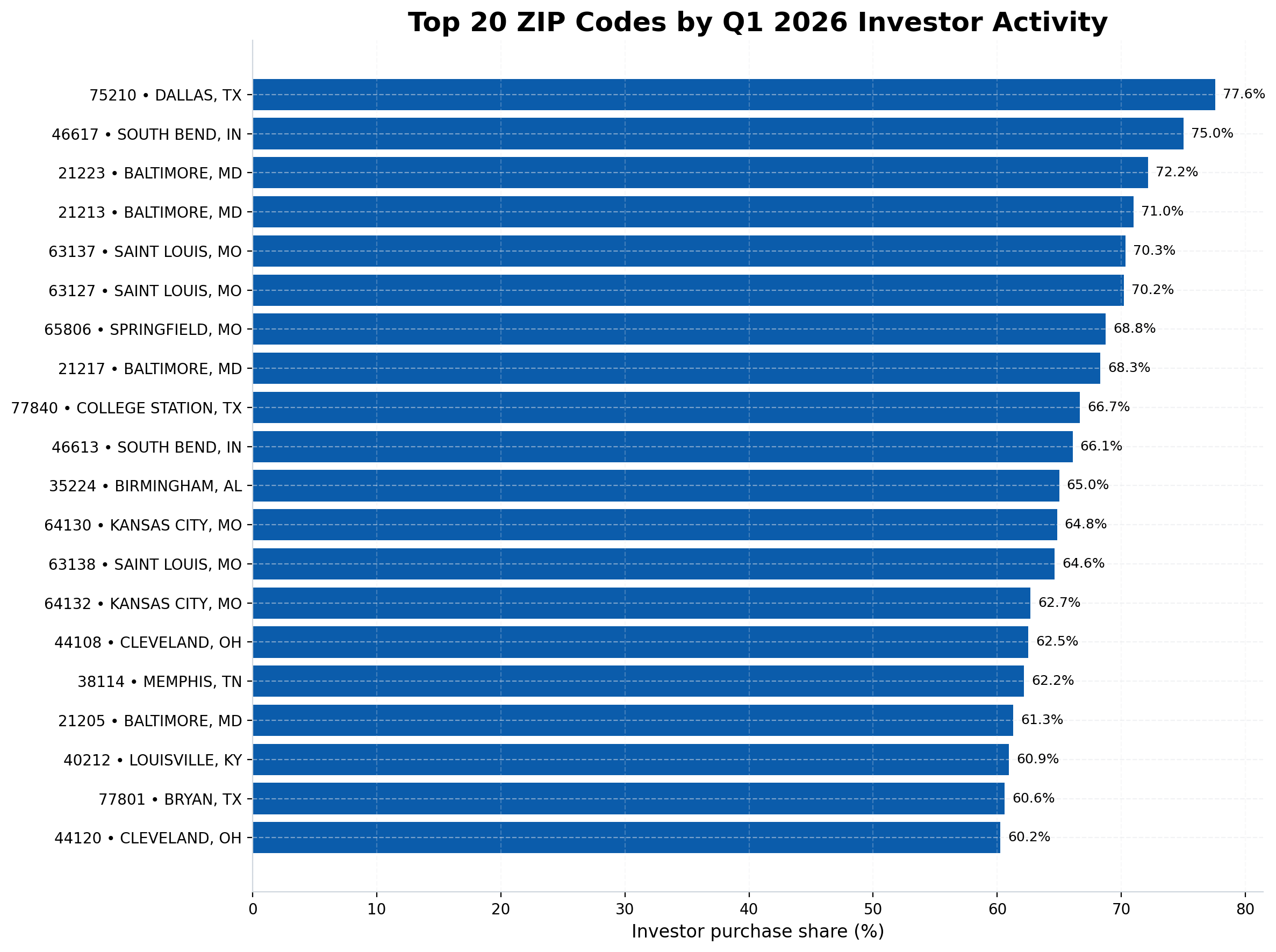
The leaderboard still leans toward older, lower-basis housing stock where operators can buy below replacement cost and still make the numbers work after rehab. That part looks very similar to the earlier posts. What changed is the mix inside that theme: Dallas moved to the top, South Bend pushed into the top tier, and higher-end ZIP codes like 33133 in Miami and 90272 in Pacific Palisades remain part of the national picture.
The Hottest ZIP Codes
The top ZIP codes now break into three distinct investor strategies:
Classic yield and rehab markets: St. Louis, Baltimore, Memphis, Cleveland, Kansas City.
Concentrated operator bets: South Bend, Braddock, where one buyer or a small cluster drives most of the activity.
High-end strategic buys: Miami, Pacific Palisades, where the thesis is redevelopment, privacy, or long-duration appreciation rather than cash flow.
The Metro Pattern Is Still Clear
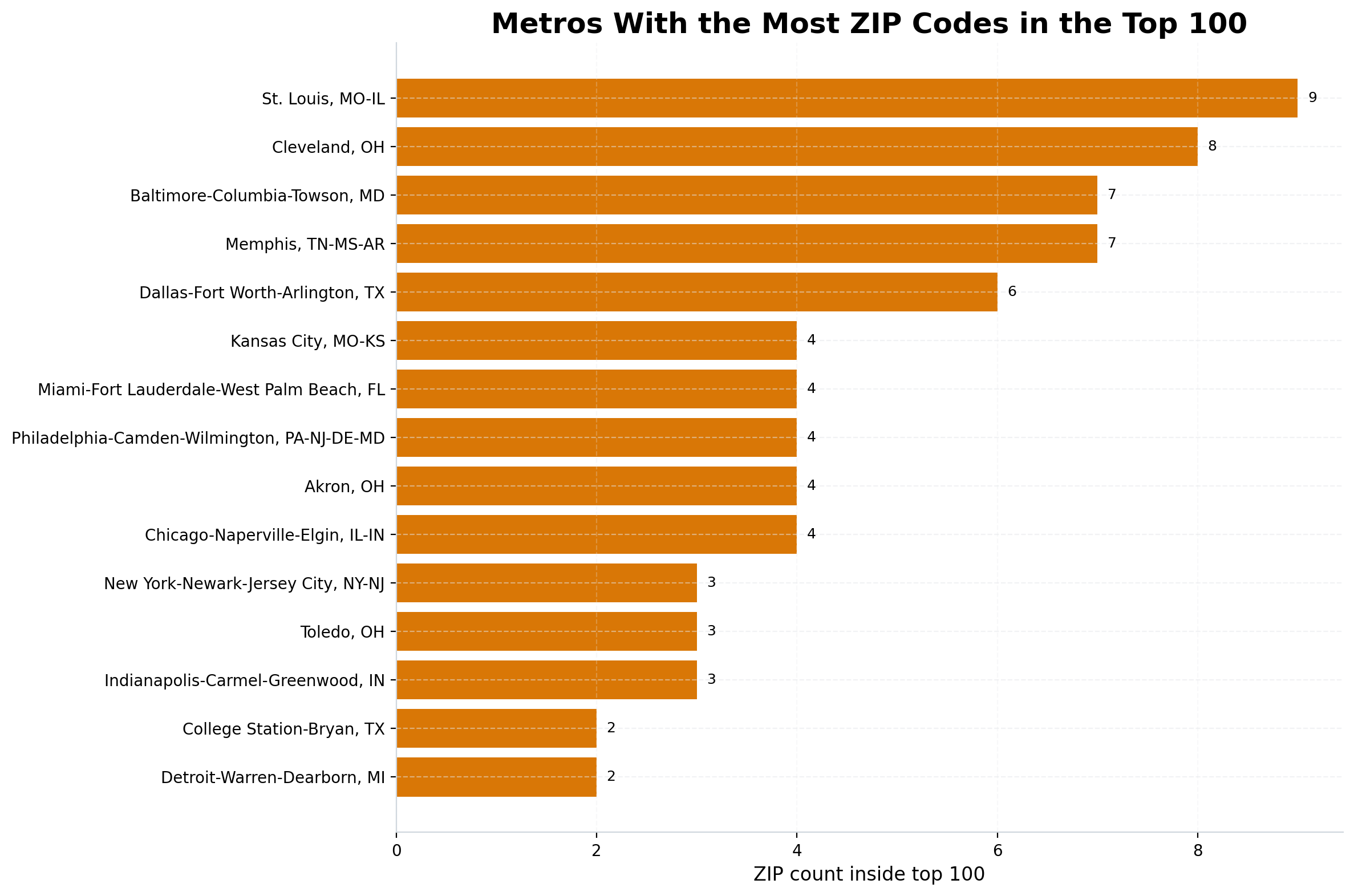
One reason the national list still looks familiar is that investor-heavy ZIP codes remain concentrated in a handful of metros. St. Louis alone contributes twelve ZIP codes to the top 100. Memphis, Baltimore, and Cleveland continue to show up as deep ecosystems, not just isolated neighborhoods. So while the #1 ZIP code changed, the national backbone did not.
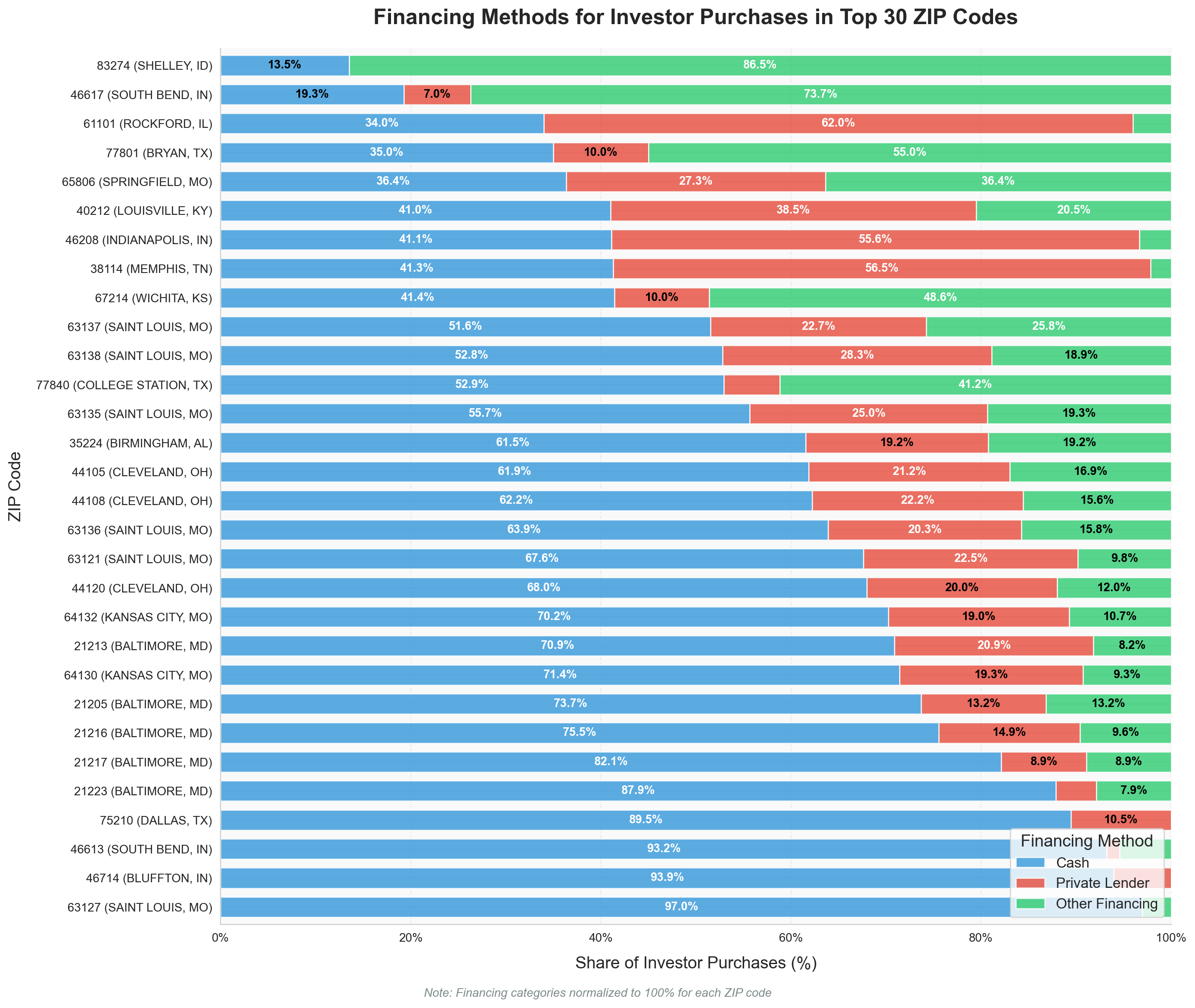
How These Deals Are Getting Financed
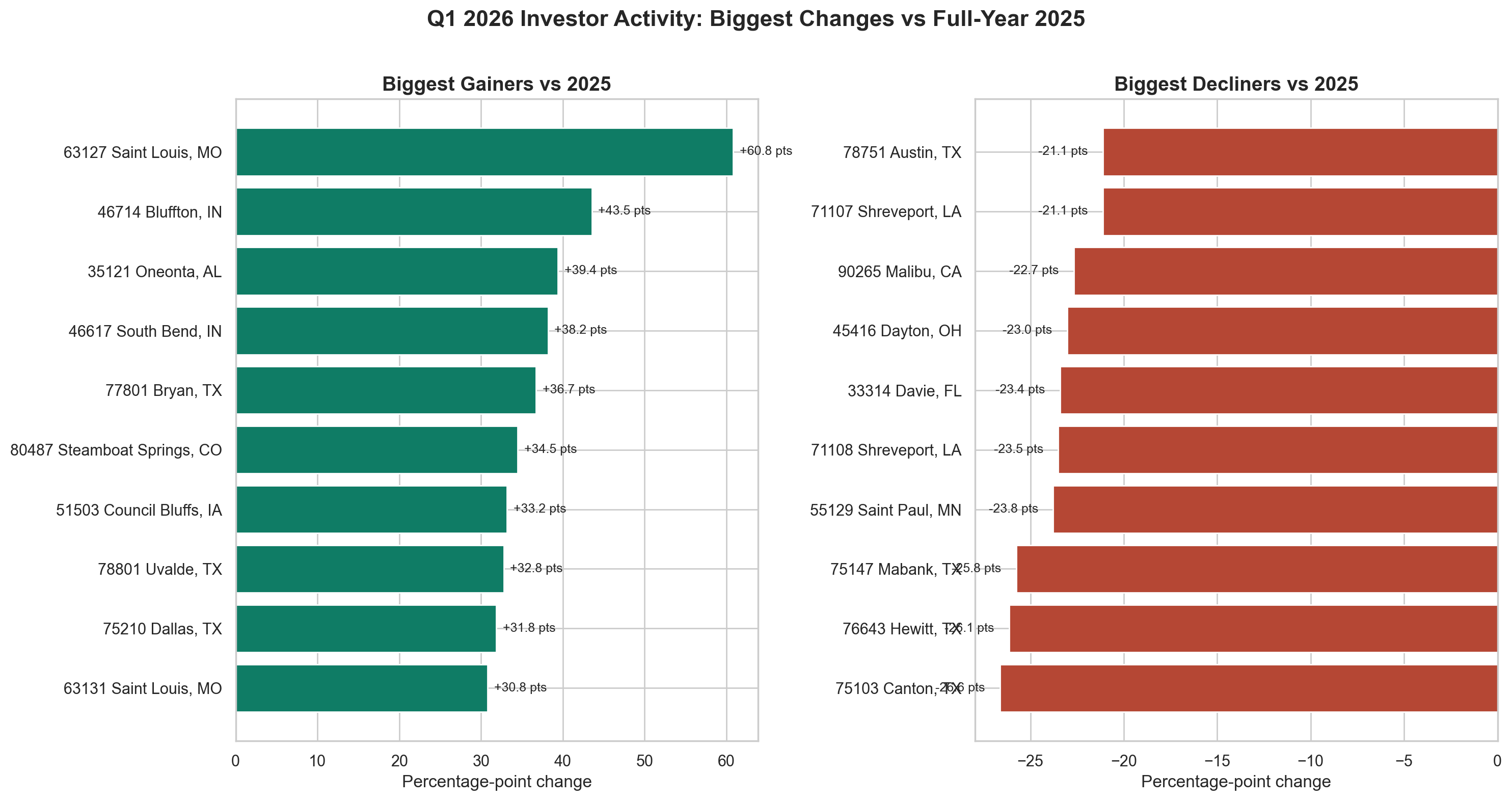
Biggest Movers
The same-quarter year-over-year comparison is the cleanest short-term pulse check because it holds seasonality constant.
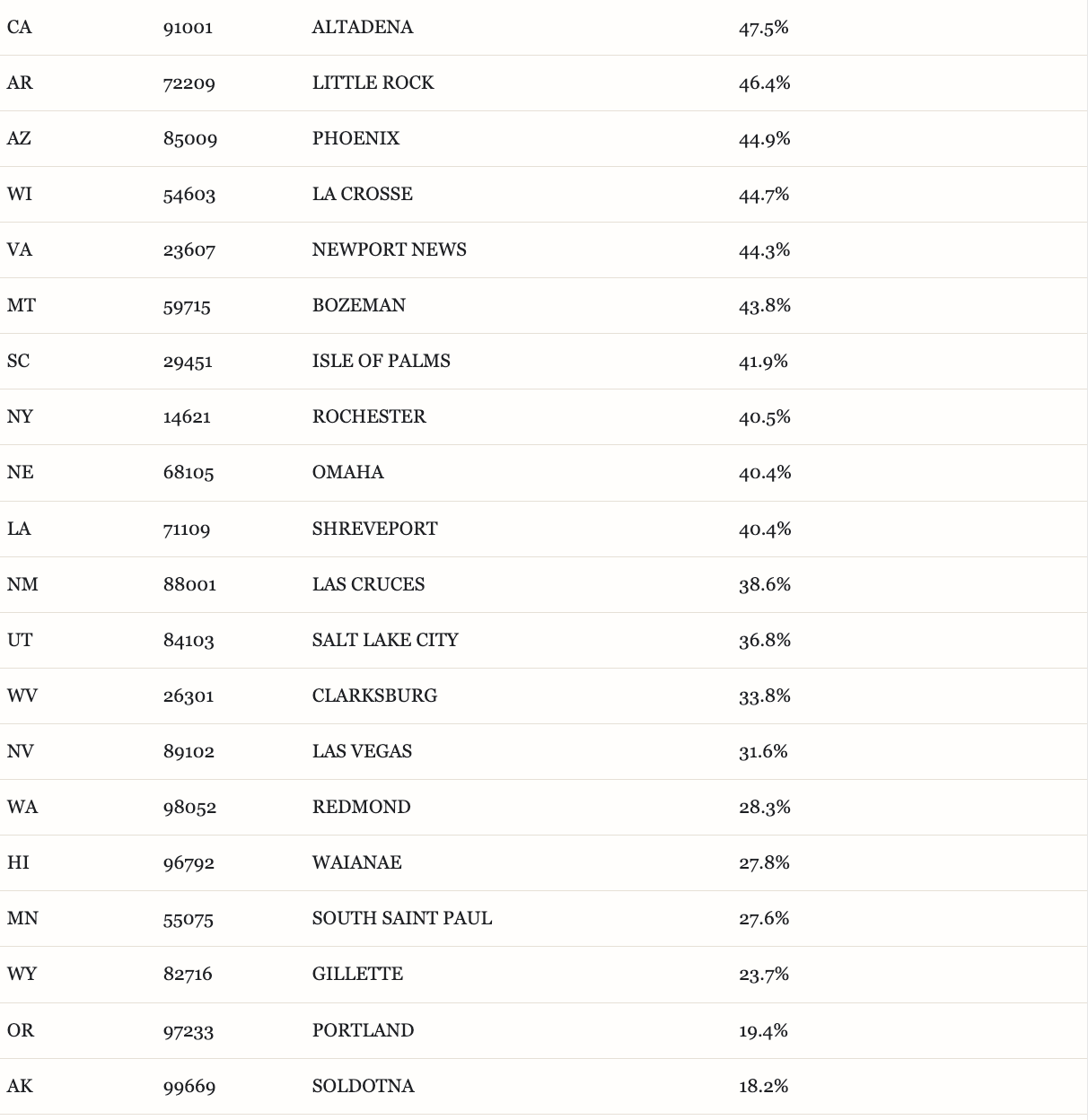
Top Investor ZIP in Every State
This is the full 50-state table rather than a top-20 slice. Some states top out below 20% investor share. Others still have one neighborhood or submarket where investors accounted for more than half of all qualifying single-family resales in the quarter. The spread itself is the point: investor concentration remains deeply uneven across the country, even where the national narrative looks similar to last year.