

The Coliving market has seen significant growth and attention among single-family rental investors. Companies like PadSplit have grown significantly (they now have >20,000 units on their platform, across 40 markets), and Coliving has become a hot topic among fix-and-flip and single-family rental influencers.
We aggregated room-for-rent data across major online portals and compared it to rental estimates if owners were to rent out the property full-time as a standard long-term rental. We took the listed room price and multiplied it by the number of bedrooms to get a Coliving monthly estimate. While of course there’s nuance (different rooms go for different amounts, there’s often more vacancy in Coliving properties, etc), it’s a helpful rule of thumb to compare rent premiums.
Overall, single-family homes rented out via Coliving had a 28% median premium over the Rent Zestimate.

For larger single-family homes, the premium grows and starts to add up significantly.
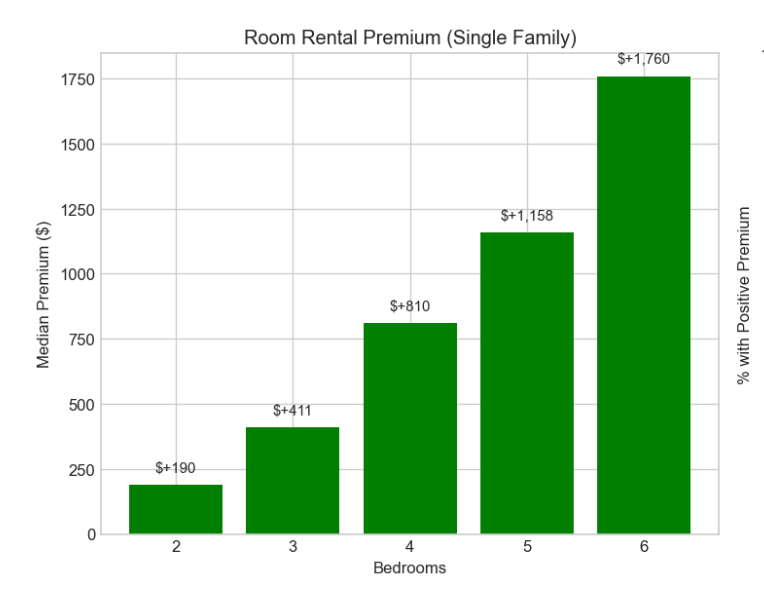
One interesting quirk: the majority of rooms listed for rent aren't from investors, but from owner-occupants looking to earn income from unused bedrooms. Coliving prices in this analysis are also pushed down by existing tenants looking for roommates, who typically just split their rent rather than charging a premium.
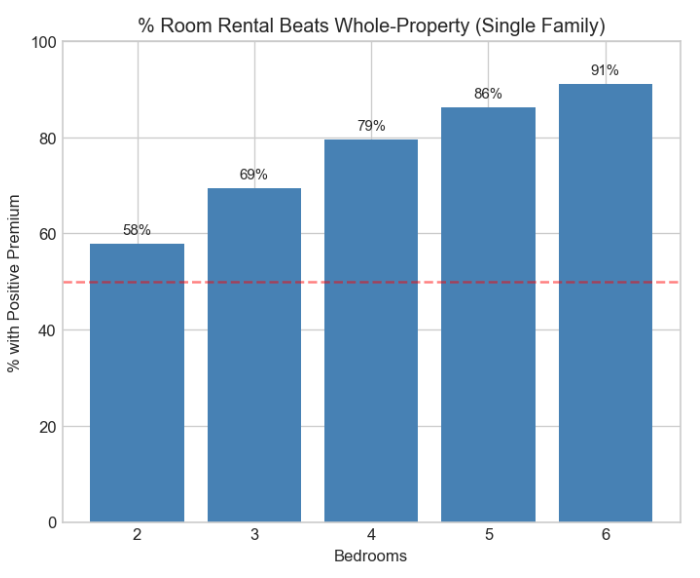
Properties with more bedrooms are more likely to rent above the Rent Zestimate.
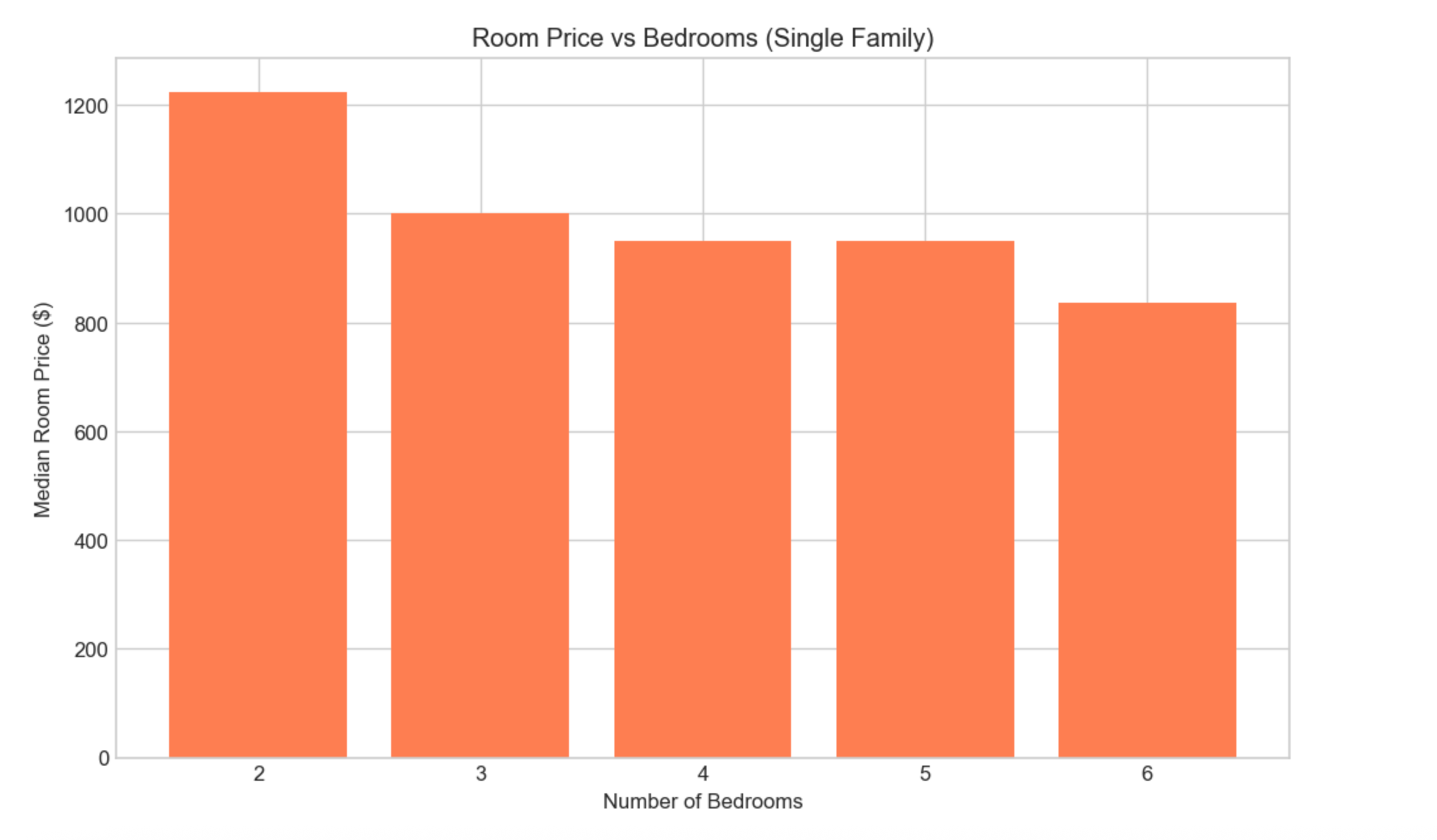
There's a large premium on room prices for 2-bedroom properties, but this levels off for bedrooms 3–5 before jumping again at the 6th bedroom. This is mostly a function of room size.
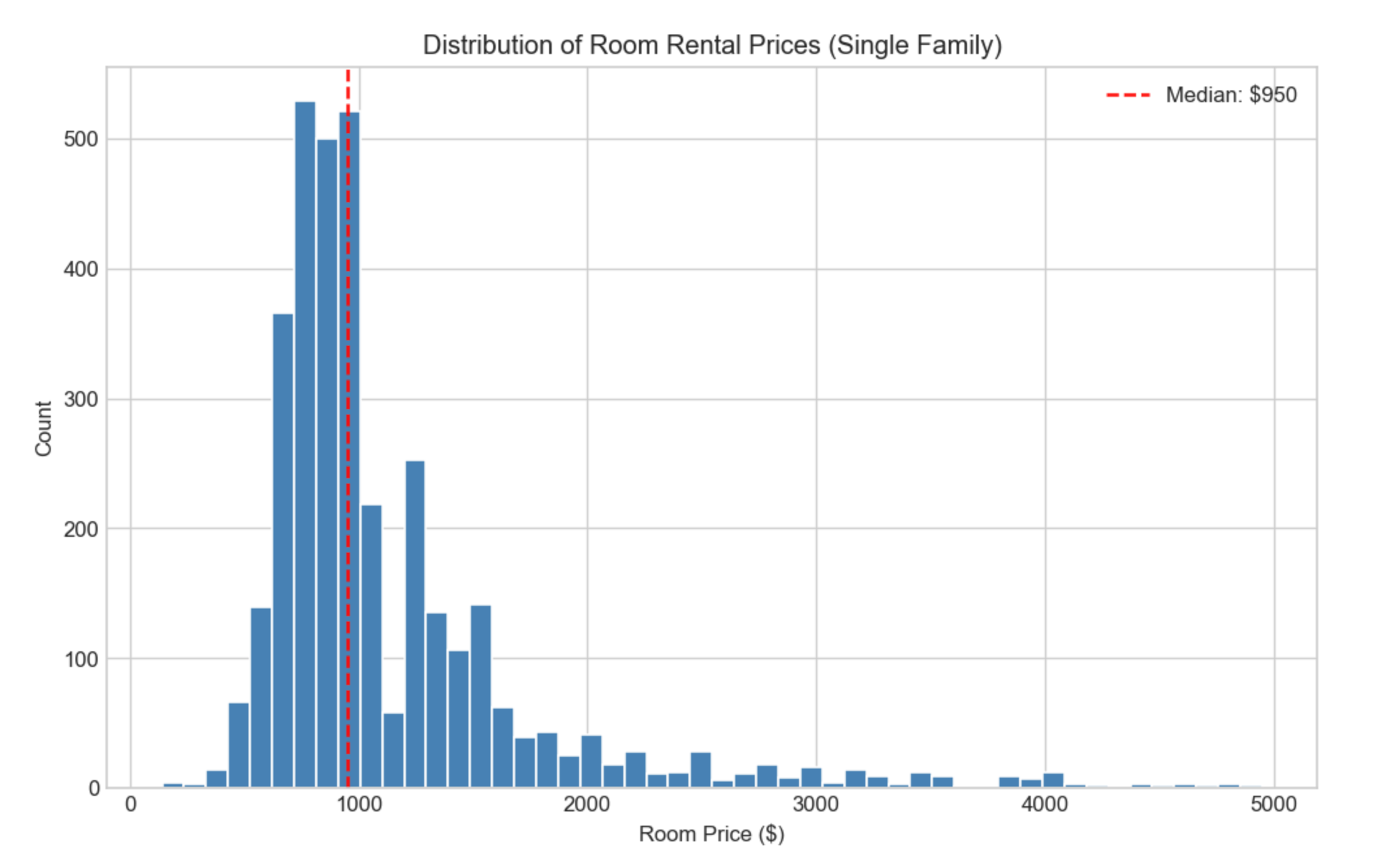
Outside of a few premium properties, the bulk of rooms rent between $750–$1,250 nationwide, with a strong floor of $700/month in nearly every market.
When broken out by state and metro, more expensive markets typically had lower premiums. We believe this is because many of these listings come from master tenants who aren't charging a premium (they're simply dividing rent among roommates) versus less expensive markets where landlords are doing this opportunistically.
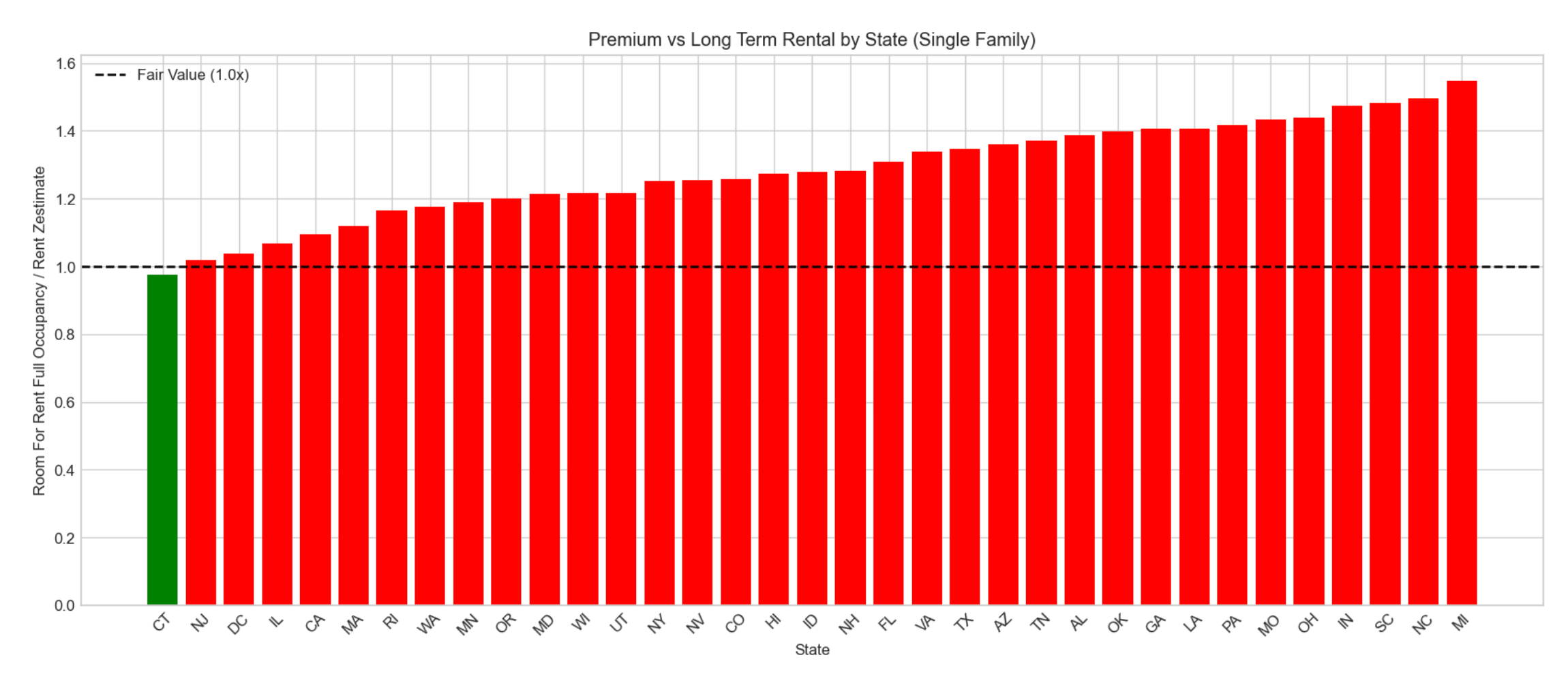
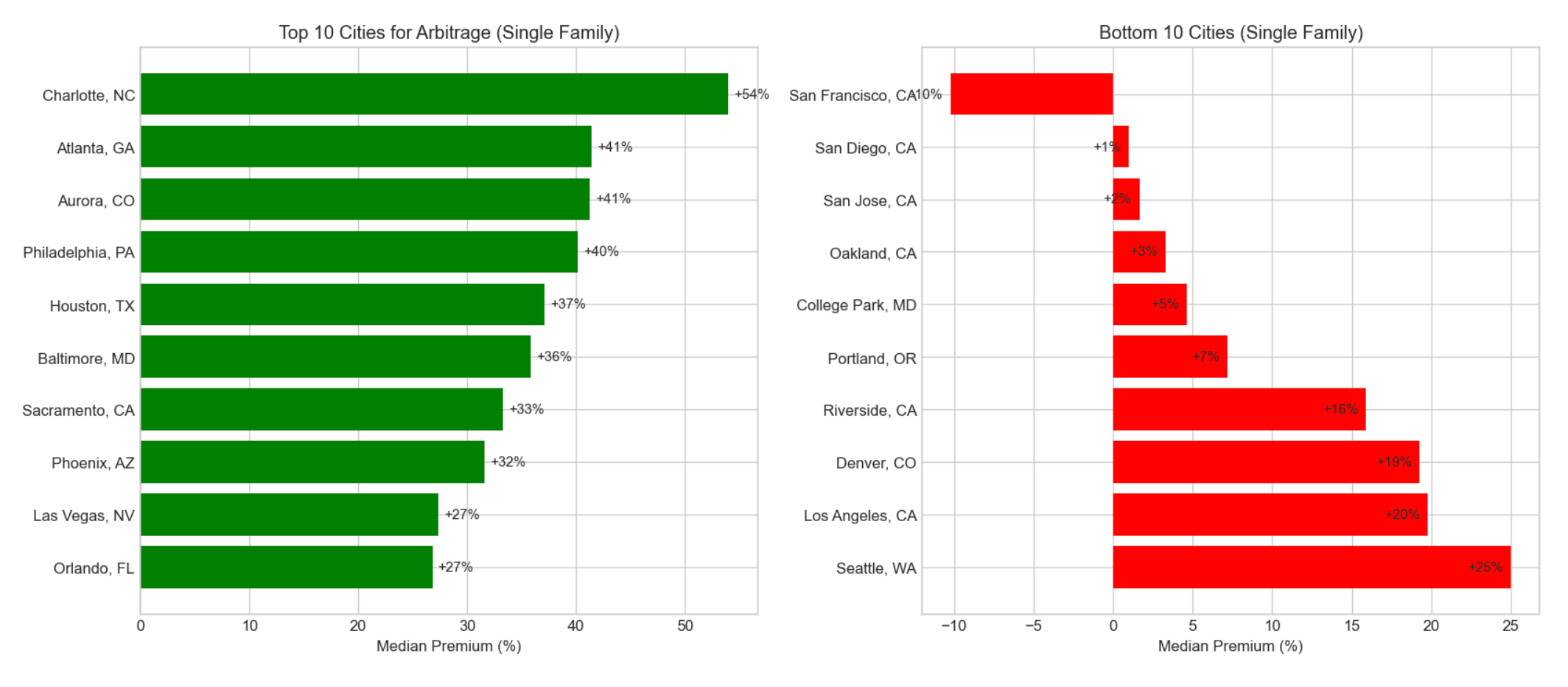
California accounted for 6 of the 10 markets with the lowest premiums.
While the gross premiums are attractive, higher vacancy, turnover costs, and management fees eat into the margin. Financing can also be difficult; many note buyers prefer DSCR loans on standard long-term rentals and view Coliving properties as problematic. Modifications to add bedrooms can hurt resale value, and the management burden is heavier.
Interested in a spreadsheet breaking down city-by-city premiums? Paid subscribers can get it by emailing us at support@sfranalytics.com